

The School of Educational Sciences and Psychology combines the competences of adult education, education, special education, psychology and counselling. Each of our study programmes provides skills for doing human-centric, important and valuable work.
Our school is an important social expert, operator and developer regionally, nationally and internationally.
The School of Educational Sciences and Psychology constitutes part of the Philosophical Faculty.
108
Peer-reviewed publications (2024)
139
bachelor's degrees issued (2024)
170
master's degrees issued (2024)
Research
We do research in education, learning environments, learning, well-being, need for special support, technological solutions, evaluation, counselling, life course and health-related psychology.
Our research is multidisciplinary and it has a strong connection to and impact on the surrounding society and current phenomena. Our research objectives are closely related to developing and supporting learning, childhood education and care, education and working life.
Research areas
Theme 1. Learning society and civilized citizenship
Question: How do adult learning, “Sivistys” and active citizenship develop over time, locally and globally?
Searching for answers: The theme explores the Finnish learning society and its change as part of international developments from the perspectives of sociology of education and adult education. The areas of interest are the conditions, processes and outcomes of changes in education, learning, citizenship and liberal adult education. The research asks how citizenship is created, how it is cultivated at different stages of the life course, and how increasing immigration and globalization are reflected in it.
Questions and answers: Jyri Manninen, Juha Kauppila
Collaborators: Freedom and responsibility of liberal adult education, Association of the Finnish Study Centres, Kansalaisfoorumi
Theme 2. Work and learning in diverse environments
Question: How do adults' competences, learning, well-being and work careers develop over time and how to create innovative work communities through them?
Searching for answers: In this theme, multimethodological research is carried out on workplace learning, competences, well-being, careers of adults and the development of organizations. The research examines public and private sector employees in the context of changing and differentiated organizations. The issues of bullying and harassment in work communities are also studied, especially from the perspective of teachers and their work motivation.
Questioners and respondents: Soila Lemmetty, Matti Meriläinen, Sonja Kosunen, Heidi Huilla, Alina Inkinen, Sara Juvonen, Marika Pylkkö, Lotta Saariluoma
Collaborators: JOTPA, Polamk, SLATE (University of Bergen), ENI (University of Stuttgart), SURE
Theme 3. Young people and inequality
Question: How is the inclusion and inequality of children, young people and young adults constructed in society and its institutions? The theme analyzes issues of power relations, equality and equity in education in the research fields of sociology of education, economics, political research, philosophy and critical pedagogy. The research grasps the questions of how agency, identity and moral orders are promoted, exchanged and contested in the sensitive phase of life. The focus is on an intersectional analysis of social class, gender and various minority positions in education policies and practices.
Questioners and respondents: Sonja Kosunen, Ari Sivenius, Heli Mutanen, Salla Myyry, Heidi Huilla, Alina Inkinen, Saara Juvonen
Collaborators: The Finnish Youth Research Society, SURE
Theme 4. Global education and sustainable futures
Question: How to build sustainable futures with learning and education? Searching for answers: The theme critically examines learning, pedagogy and educational practices from the perspective of global citizenship, global justice and sustainable futures. The focus of research is socio-cultural and socio-political. Questions about global crises are approached from from ecological and social justice perspectives. Research can be carried out in formal, non-formal and informal environments and across them.
Questioners and respondents: Antti Rajala, Juha Kauppila, Erja Laakkonen
Partners: Fee Suomi, Fingo, Gerif Network, UC Links (University of California).
Theme 5. The university as a pedagogically developing community
Question: What are high-quality learning and teaching at the universities and universities of applied sciences?
The theme includes multidisciplinary research on higher education students' learning, generic skills, regulation of learning, engagement, and educational transitions. Research also focuses on the assessment of learning and competencies, and the development of teaching, learning environments, and pedagogical practices. Research on this theme utilizes a multi-method approach and it focuses on various disciplines. The findings of research will be used in the development of higher education and university pedagogical training.
Questioners and respondents: Heidi Hyytinen, Päivi Atjonen, Jyri Manninen, Sanna Väisänen, Antti Ronkainen, Sirkku Lähdesmäki
Collaborators: UEF DIGS, UEF faculties and other units, KAARO network, Finnish Institute for Educational Research (University of Jyväskylä), HYPE (University of Helsinki), Council for Aid to Education
Below you can find the research staff organized by the position, the head of the academic subject being the first one.





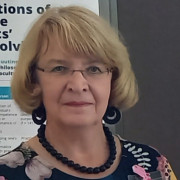














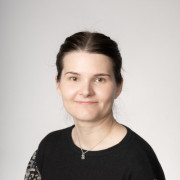




Research in UEF special education is focused on learning, teaching, well-being and inclusion of people of different ages. We also study specific learning challenges and forms of support. Our research contexts include early childhood, primary, secondary, and tertiary education, as well as adult and older people's learning and teaching. The strengths in research approaches include intervention research, conversation analytic research, learning analytic research, participatory research, longitudinal research, eye movement research and visual methods research. Our research is used for national policy making and teacher training development. The scientific discipline of special education is a major subject for the students in special education teacher training.
Research, research collaboration, and dissertation supervision
- Autism spectrum: Professor Eija Kärnä, Postdoctoral Researcher Anniina Kämäräinen, University Lecturer Virpi Vellonen, Senior Researcher (Docent) Kwok Ng
- Digitalization in teaching and learning: Professor Eija Kärnä, Professor Erkko Sointu, Assistant Professor (tenure track) Kaisa Pihlainen, Senior Researcher (Docent) Kwok Ng, University Lecturer Virpi Vellonen.
- Prevention, participation, and learning: Assistant Professor (tenure track) Kaisa Pihlainen
- Learning for older people and digital literacy support: Professor Eija Kärnä, Assistant Professor (tenure track) Kaisa Pihlainen
- Inclusive education: Professor Eija Kärnä, Professor Hannu Savolainen, Assistant Professor (tenure track) Kaisa Pihlainen, Senior University Lecturer Aino Äikäs, University Lecturer Anne Karhu, Senior Researcher (Docent) Kwok Ng, Postdoctoral Researcher Anniina Kämäräinen.
- Language difficulties, supporting speech, communication and interaction: Professor (emerita) Leena Holopainen, University Lecturer Virpi Vellonen
- Supporting schoolwork at home and home-school collaboration: Professor Jaana Viljaranta, Professor Erkko Sointu
- Behavioral support: Professor Hannu Savolainen,, Professor Erkko Sointu, University Lecturer (Docent) Kristiina Lappalainen, University Lecturer Anne Karhu, Lecturer Pirjo Savolainen
- Supporting the well-being of student teachers: Assistant Professor (tenure track) Kaisa Pihlainen, University Lecturer Virpi Vellonen
- Teachers' self-efficacy in inclusive education: Professor Hannu Savolainen, Senior Researcher (Docent) Kwok Ng
- Development of teaching methods and support for learning in higher education: Professor Erkko Sointu, Senior University Lecturer Aino Äikäs, University Lecturer Virpi Vellonen
- Learning motivation research: Professor Jaana Viljaranta
- Health promotion and adapted physical activity: Senior Researcher (Docent) Kwok Ng
- Support planning and documentation: University Researcher Noora Heiskanen
- Need for support, school and life course: University Lecturer (Docent) Kristiina Lappalainen, University Lecturer Katariina Waltzer
- Significant support and interprofessional collaboration: Senior University Lecturer Aino Äikäs
- Early childhood special education: University Researcher Noora Heiskanen, University Researcher Anu Kuukka, University Lecturer Marja Syrjämäki
- Social interaction in inclusive environments: Postdoctoral researcher Anniina Kämäräinen
Below you can find the research staff organized by the position, the head of the academic subject being the first one.

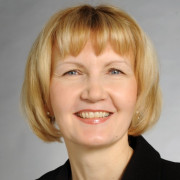
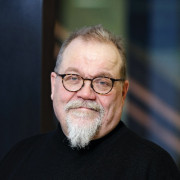














Research on guidance
How does guidance influence the agency of individuals, groups, or communities? How is guidance constructed as a professional practice? How do societal structures constrain or enable individual action within educational and employment institutions?
Our research is characterized by an interest in the intersection between individual meaning-making and societal structures, as well as theoretical perspectives that address this interface. The framework of social justice in educational and career guidance is central to our work, and we seek ways to implement it in concrete guidance practices. Guidance is a multidisciplinary field, and our research draws from education, sociology, and psychology.
Key research areas
The significance of social relationships and differences for individual agency, action horizons, and career adaptability. We study these phenomena in contexts such as comprehensive school, upper secondary education, and higher education. A particular focus is on questions of intersectionality and anti-racism in guidance and the formation of educational choices. We study societal ideals and norms as experiential and cultural phenomena, and how they define the boundaries of individual existence. For example, we examine the demand for sociability from the perspective of those who identify as shy, and the ideals that higher education teachers associate with students. Methodological approaches include both quantitative and qualitative methods (e.g., ethnography, content analysis, and narrative-discursive methodologies). We are also interested in statistical correlations between societal factors and received guidance.
Research of guidance interaction applying ethnomethodological conversation analysis. We investigate core phenomena of guidance interaction (e.g., goal setting, building collaborative relationships, presenting evaluations, exploratory talk) and their connection to institutional goals and ideals of guidance, such as agency and capability. A key perspective is the expression of emotions and responses to them (e.g., empathy) in interaction, such as in the use of voice by the counselor. We are also interested in alliance-building at the interactional level and changes in the agency of the counselee.
Structuring guidance and guidance competence as social activity and examining the prerequisites for successful guidance in various institutional contexts (e.g., educational institutions and employment services). We also explore the growth and development of expertise and professional agency in professions practicing guidance and in work communities utilizing guidance methods. An important perspective is the institutional tensions of guidance and the learning and transformation opportunities they generate. Additionally, we examine guidance environments from the perspectives of different actors and their rationales for action.
Research cooperation and dissertation supervision
Professor Anne-Mari Souto coordinates doctoral studies in the field of guidance.
If you are interested in educational and career guidance processes and especially the significance of social differences (e.g., gender, age, ethnicity, race, social class) and inequality in individuals’ transitions in education and working life, contact Professor Anne-Mari Souto.
If you are interested in guidance interaction and conversation analytic research of recorded data (e.g., emotion regulation or changes in the agency of the counselee), contact Senior Researcher Liisa Voutilainen.
If you are interested in themes related to professional growth and development (e.g., growing as a counselor, emotion-focused discussions as part of professional growth, occupational well-being and coping at work) and research on group phenomena, contact University Lecturer Ulla Nuutinen.
If you are interested in educational and/or career guidance in the context of educational institutions or other institutions (e.g., whole-school guidance principle) or guidance as part of multidisciplinary collaboration (e.g., student welfare) from the perspective of an individual actor (student, job seeker, professional) or the entire community, contact University Lecturer Kirsi Raetsaari.
There are two research groups active in guidance education:
Social Differences and Inequality in Education and Guidance, and
Emotion in Interaction.
Below you can find the research staff organized by the position, the head of the academic subject being the first one.












Multidisciplinary quantitative and qualitative research
Our research is multidisciplinary. We approach psychological phenomena from the perspectives of society and culture, life course, children and families, school and education, work, professions, and climate change. Research focuses on health, education, work and organisations, and forensic psychology.
We use a wide range of research methods. Our critical psychology research group utilises narrative and discursive methods to explore issues such as life courses, understandings of health and illness with their cultural connotations, and ideals of education and work and their meaning for people. The qualitative strand also includes our research on, for example, perceptions of psychologists and their professional practices.
We conduct register research, systematic reviews and meta-analyses to provide a comprehensive and reliable overview of findings from large datasets and individual studies. We use our quantitative research expertise to look at well-being at work and work ability, as well as depression and recovery. In the area of health psychology, we study the well-being of students and teachers in different countries and the well-being and work capacity of employees in a changing workplace. Our health psychology research also includes themes from positive psychology, such as empowerment, recovery from work and supporting well-being at work. In the area of forensic psychology, our research focuses on crimes against children, both from the perspective of children and offenders.
Research co-operation and dissertation supervision
- If you are interested in mental health and well-being research or forensic psychology, please contact Professor of Clinical Psychology Kirsi Honkalampi.
- If you are interested in occupational health psychology and health psychology issues, please contact Professor Taina Hintsa, Professor of Health Psychology.
- If you are interested in research related to critical psychology and qualitative methods, please contact Professor Katri Komulainen or University Lecturer Maija Korhonen.
- If you are interested in research issues related to school and student life, please contact University Lecturer Matti Kuittinen or Senior Lecturer Kati Kasanen.
- If you are interested in psychological issues and mental health in working life, please contact Marianna Virtanen, Professor of Work Psychology.
Below you can find the research staff organized by the position, the head of the academic subject being the first one.











Our research groups and projects


Studies
The School of Educational Sciences and Psychology offers degree programmes in the following disciplines: psychology, education, adult education, special education and counselling. In addition, we organise training that leads to the qualification of special education teachers, career counsellors and psychologists. Our school also offers minor subject studies in these disciplines and separate qualifying or specialisation studies to be completed after degree studies, such as the Certificate Programme for Special Education Teachers (Early Childhood Education and Care), the Certificate Programme for Special Education Teachers, Specialisation training for psychologists in health psychology, and Qualification Studies for Career Counsellors.
Our modern learning environments, seminars, groups and online environments enable flexibility in studying. In addition, most of the study programmes include periods of practical training or on-the-job learning.
Your choice of major subject affects your employment opportunities, which include schools, teaching, counselling and human resources management, as well as becoming a psychologist or trainer. Broad-based skills and competencies will guarantee access to a wide range of jobs.
In addition to our Bachelor's Degree Programme and Doctoral programmes taught in English (see below), we also offer a variety of degree programmes taught in Finnish. To learn more about our degree programmes, please visit our page in Finnish.
Bachelor's Degree Programme and Doctoral Programme


News and events
News
Contact information
Please find a comprehensive list of staff members in UEF Connect, where you can also search people by name or key word.


University of Eastern Finland’s Student and Learning Services is responsible for providing general study-related administrative services for students and staff, as well as offer support for applicants.
Postal address
University of Eastern Finland
Philosophical Faculty
School of Educational Sciences and Psychology
P.O. Box 111, FI-80101
Finland
Visiting address
Yliopistonkatu 7, Futura, Joensuu