
Unclear speech can have long-term effects on an individual’s life. Research is helping to find new methods of rehabilitation.
- Text Nina Venhe | Photos Niko Jouhkimainen


When we engage in conversation with someone, our perception of their speech is not reliant on hearing alone. Facial expressions, too, play a significant role in speech perception.
This became particularly evident during the COVID pandemic, when many people reported difficulties hearing other people’s speech through face masks.
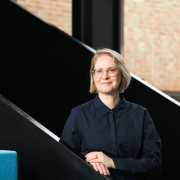
“In reality, face masks did not impede hearing that much, but they hid facial expressions that are essential for understanding speech,” says Satu Saalasti, Assistant Professor of Logopedics.
Speech production and perception are intricately intertwined processes in the brain, and the ability to speak is a trait unique to humans. When speech production is impaired or an individual’s speech is unclear, it can have lasting and negative impacts on their social relationships, employment and overall well-being.
“Current rehabilitation methods are often insufficient, and there is an urgent need to discover new methods to improve speech clarity.”

Tracking one’s tongue movements can help
Saalasti leads the ongoing Multimodal Processing of Speech project at the University of Eastern Finland, which investigates, among other things, the similarities and differences in the brain mechanisms involved in speech production and speech perception. The project also explores whether real-time tracking of tongue movements affects these mechanisms.
Tongue movements are analysed using ultrasound feedback. When a patient comes in for an examination, an ultrasound sensor is placed under their chin, allowing them to observe their tongue movements on a screen while speaking.
“We know that tracking one’s tongue movements can improve speech clarity, but we do not yet understand why. We are currently investigating what happens in the brain during this process, and why speech improves.”
So far, this type of brain research has been conducted on individuals who do not have speech difficulties. Soon, however, the aim is to include patient groups, such as children and young people, who require rehabilitation due to unclear speech.
“This allows us to address challenges in speech production at the behavioural level.”

Ultrasound feedback enhances processes in the brain
Functional near-infrared spectroscopy is a research method that enables non-invasive examination of changes in brain activity. In Finland, this method is relatively new in speech research. It involves placing a cap on the patient’s head, equipped with transmitters and receivers that detect how near-infrared light travels through the outer layers of the cortex.
This helps identify which areas of the brain are activated during specific tasks.
“It is a very gentle research method and also well suited to children, as they are allowed to move during the examination.”
According to Saalasti, initial measurements of changes in brain activity during speech production and ultrasound feedback have been highly successful, demonstrating the reliability of the method.
“We have been able to replicate findings from earlier, international studies. Preliminary results also suggest that ultrasound indeed enhances certain processes in the brain.”
Saalasti wishes not to disclose any further details yet, as the results are still being analysed and are not yet public.
“We have an ambitious goal of determining how ultrasound feedback could best be utilised in speech rehabilitation.”
The study is of high clinical relevance, as its findings may lead to the discovery of new rehabilitation methods for unclear speech caused by various factors.

LogoLab offers plenty of opportunities for novel collaboration
Satu Saalasti is a trained speech therapist, and her research has focused on the fundamental processes of speech perception, such as speechreading, or lip reading. She was drawn to the University of Eastern Finland by, for example, the modern instruments and laboratory facilities available in the field of logopedics.
“To be able to conduct the kind of speech research I’ve described above, access to a high-quality research infrastructure is essential.”
Saalasti praises the university’s innovative atmosphere and the continuously evolving degree programme in logopedics. She believes Eastern Finland offers an excellent setting for increasingly diverse research.
“LogoLab has been designed with interdisciplinarity in mind. Currently, the laboratory is used not only for research in logopedics but also for research in educational sciences and computer science. We regularly discuss future research questions and how this infrastructure might support them.”
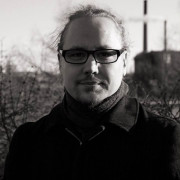
LogoLab also has a unique advantage over other universities: Petri Pulli, a Senior Laboratory Technician whom Saalasti’s wholeheartedly praises.
“It is absolutely crucial for a research laboratory to have a dedicated support person. Petri gives us researchers step by step guidance in how to use the instruments, enabling us to carry out independent research, also in terms of technology.”
Students also have the opportunity to familiarise themselves with the instruments and with experimental research over the course of their studies.
Although the laboratory’s usage rate is already high, Saalasti and Pulli would like to see even more people using it.
“We hope to see LogoLab gradually evolving into a multidisciplinary community where the same data sets and research questions could be explored from the perspectives of different academic disciplines.”