

The doctoral dissertation in the field of Neuroimaging will be examined at the Faculty of Health Sciences at Kuopio Campus. The public examination will be streamed online.
What is the topic of your doctoral research? Why is it important to study the topic?
Magnetic resonance imaging (MRI) is a powerful, non-invasive technique for studying and evaluating both soft and hard tissues at mesoscopic and microscopic scales. Since its inception, numerous acquisition techniques and analysis methods have been developed to enhance the specificity and accuracy of clinical diagnosis. Among these, diffusion and relaxation MRI enable the investigation of water molecule displacement and tissue chemical composition, respectively. These techniques and their associated analysis methods are typically developed and validated through simulations, phantoms, and preclinical and clinical studies, providing valuable insights into the microstructural properties of biological tissues.
My doctoral research fits within this framework. I employed advanced diffusion and relaxation MRI acquisition sequences, together with novel analysis pipelines, to disentangle tissue microstructure and improve the characterisation of cellular components.
What are the key findings or observations of your doctoral research?
In my doctoral research we developed a model-free mathematical framework that enables robust solution of frequency-dependent diffusion using advanced encoding methods, reducing the need for assumptions about tissue structure. Second, we proposed multidimensional diffusion-relaxation correlation MRI, an acquisition and analysis framework that simultaneously captures structural and chemical properties of tissue, providing substantially richer information than conventional MRI. Finally, we developed a data-driven analysis pipeline that automatically identifies and classifies distinct tissue water populations, allowing different cellular environments to be distinguished without predefined tissue models.
Together, these advances improve our ability to non-invasively characterise tissue composition and cellular architecture. These methods provide new tools to study healthy and diseased tissue and have the potential to improve the specificity of MRI in neurological disorders, cancer, and other diseases where microstructural changes are difficult to detect using existing imaging techniques.
What are the key research methods and materials used in your doctoral research?
My doctoral research combined advanced MRI methodology, mathematical modelling, and data-driven analysis to characterise tissue microstructure non-invasively.
The research involved the development of novel MRI acquisition protocols, and new computational methods for data analysis. A key aspect was the use of model-free and nonparametric inversion approaches to extract multidimensional distributions directly from MRI data without assuming predefined tissue models. Machine learning techniques were then applied to classify distinct tissue water populations and identify biologically meaningful tissue components. The methods were developed and validated using simulations, numerical phantoms, and experimental MRI data from preclinical and human MRI scanners.
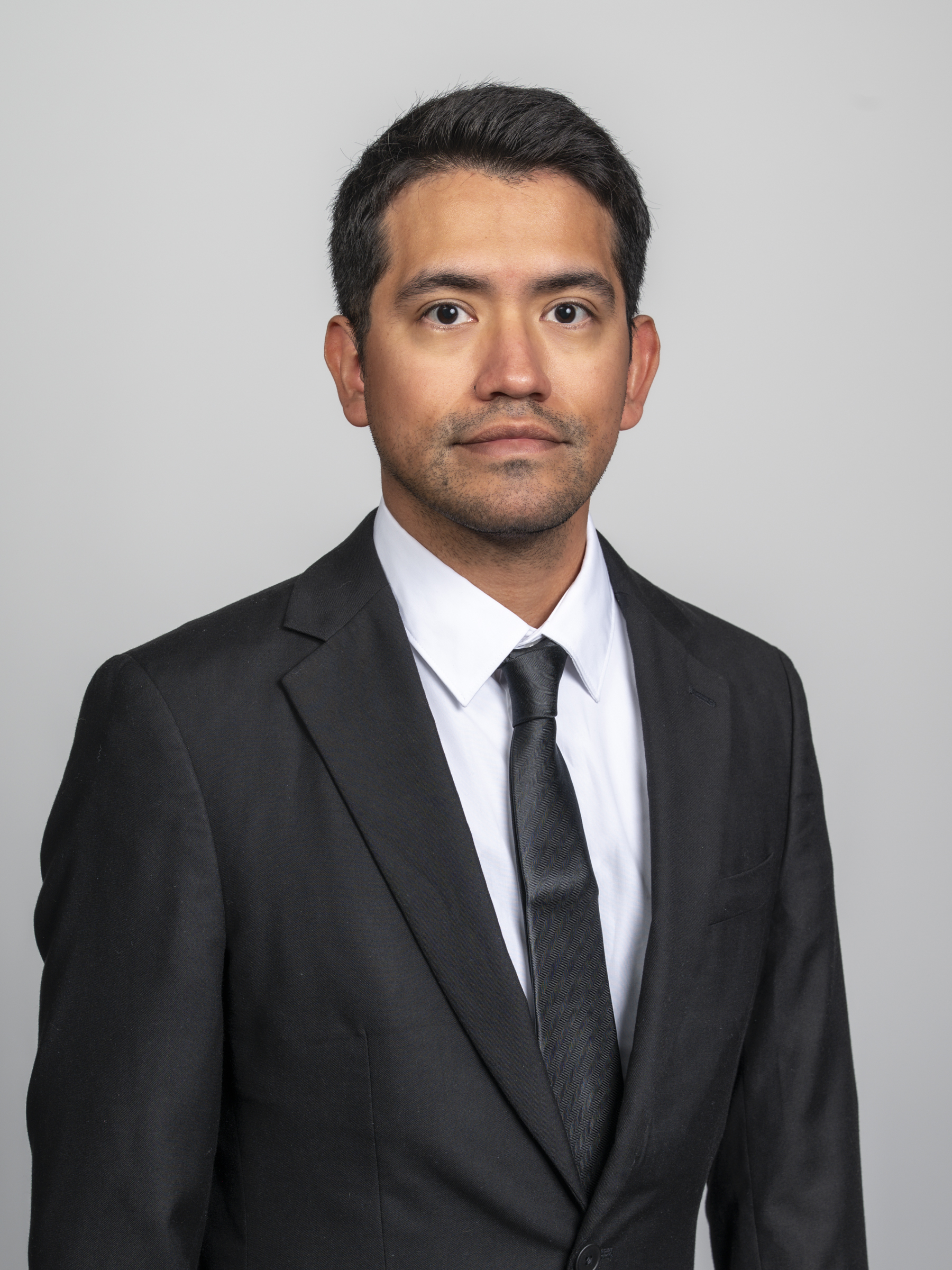
The doctoral dissertation of Omar Narvaez Delgado, MSc, entitled Frequency-dependent multidimensional diffusion-relaxation correlation MRI, will be examined at the Faculty of Health Sciences. The Opponent in the public examination will be Associate Professor Ben Jeurissen of the University of Antwerp, and the Custos will be Professor Alejandra Sierra Lopez of the University of Eastern Finland. The public examination will be held in English.