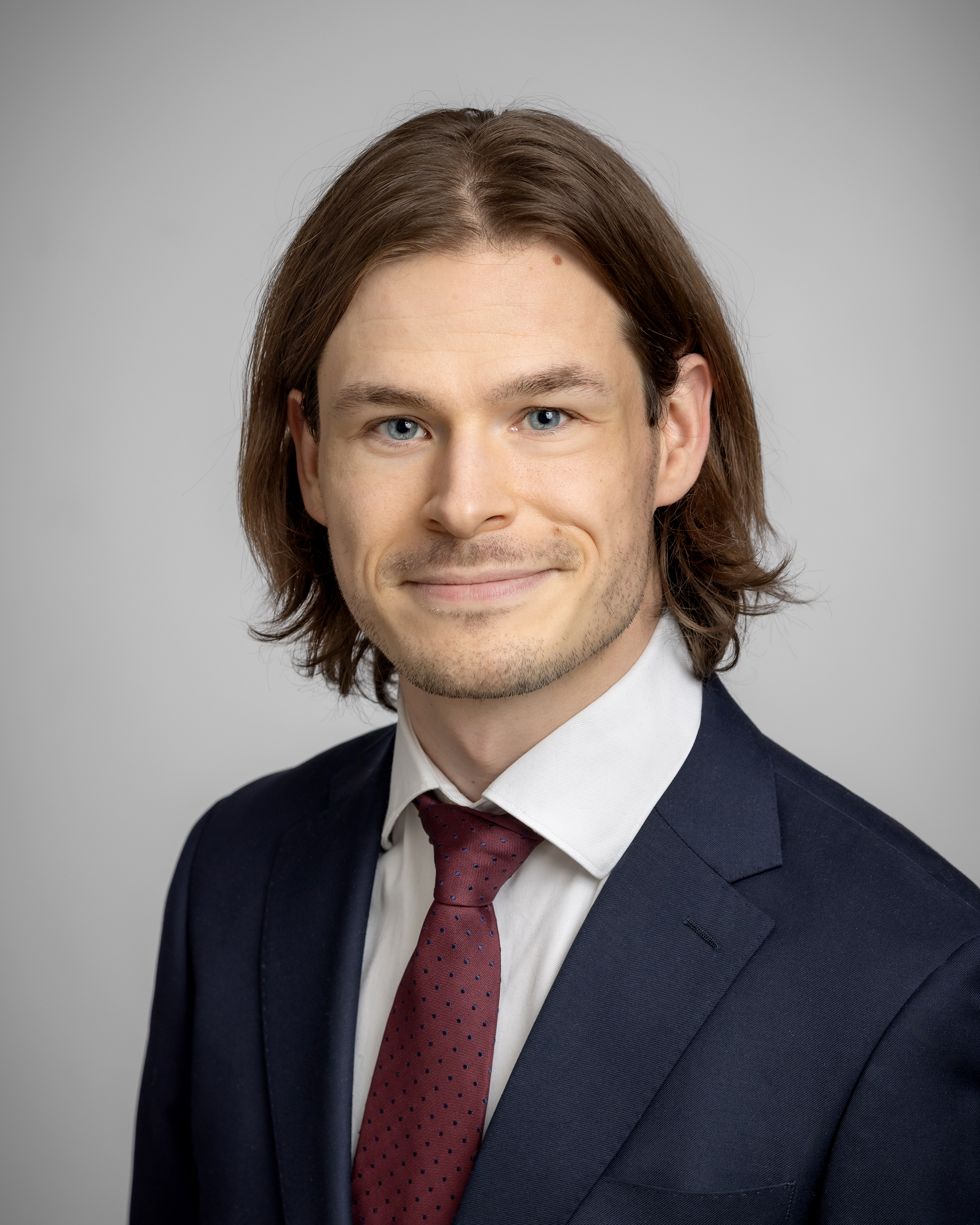


The doctoral dissertation in the field of Nanomedicine will be examined at the Faculty of Health Sciences at Kuopio Campus. The public examination will be streamed online.
What is the topic of your doctoral research? Why is it important to study the topic?
Very potent drugs often fail due to the fact that they get degraded very fast before they can make an impact and reach the target area in the body. Nanoparticles can significantly enhance the delivery of different types of drugs by acting as a shield from the extracellular environment. This will increase the circulation time of the drugs. The particles can also be modified with different coatings to target specific tissues and simultaneously minimise off-target effects. Despite already great promises in the field, like liposomal chemotherapies and the recently developed COVID-19 mRNA vaccines, there are still many challenges left for nanoparticles in order for them to become a mainstream form of treatment. That's why I wanted to try to add to the current base of literature that tries to enhance the therapeutic efficiency of nanoparticles.
What are the key findings or observations of your doctoral research?
I showed that there are many different aspects of nanoparticles that can be optimised. I showed a potential new way to load particles, a highly effective tumour-targeting peptide that could be used as a coating for nanoparticle targeting to retinoblastoma, and I investigated polymer coatings of hyaluronan and if they aid in the stability of particles during long-term storage. With my thesis I hope to add to the current knowledge about improving the therapeutic efficiency of nanoparticles. It shows that there is a fine line that has to be walked when trying to optimise these particles to get the best results. And just how many parameters that need to be thought about can play a crucial role for optimisation.
How can the results of your doctoral research be utilised in practice?
Optimisation of nanoparticles for drug delivery is a very necessary part of research. The main results could be used in practice to try and further this research along. Finding optimal particles to target certain organs or tissues would bring an immense wave of precision medicine that will improve the general well-being of patients. For example, antidepressants now are known for having many side effects due to the fact that they act not just in the brain but also in other parts of the body. Having particles that mitigate these side effects will greatly enhance patient well-being.
What are the key research methods and materials used in your doctoral research?
I started in 2022 and found my way through different research going on in the university by the great supervision of my supervisors, Kirsi Rilla and Tatu Lajunen. Since my research was related to nanoparticles, it contained a lot of microscopy, including transmission electron microscopy, in order to visualise the structure of the particles and see particle accumulation in cells. Also, I have done many cell delivery experiments to see the effectiveness of the particles.
The doctoral dissertation of Stef Bosch, MSc, entitled Towards enhanced targetability and efficiency of therapeutic nanoparticles – strategies, mechanisms, and emerging trends will be examined at the Faculty of Health Sciences. The Opponent in the public examination will be Professor Jessica Rosenholm from Åbo Akademi and the Custos will be Docent Kirsi Rilla from the University of Eastern Finland. The public examination will be held in English.
Doctoral dissertation (link available later)
For further information, please contact:
Stef Bosch, MSc, [email protected], +358451186763