

suomi (Suomi) English (United States)

Chemical carcinogens - kinetics and effects  


   1. Fetal exposure and placental toxicity

   2. Molecular mechanisms of chemical carcinogenesis


Research group: 
  
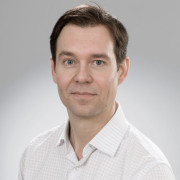
Kirsi VähäkangasProfessor of Toxicology
Jarkko LoikkanenResearch Specialist
Marjo HuovinenResearcher
Vesa KarttunenResearcher
Heidi PartanenResearcher
Jenni VeidResearcher
Virpi KoponenLaboratorian

 
PhD students in collaboration with other universities:

University of Oulu:  Jenni Peltonen, MD; Liisa Laatio, MD, Elina Sieppi, MSc, Maria Kummu, MSc

University of HongKong: Jackson Woo, MSc.


 1. Fetal exposure and placental toxicity

While there is both clinical and experimental knowledge of human fetal exposure to clinical drugs, knowledge about environmental chemicals is practically non-existent. Since in vivo research has, of necessity, been limited to animal species, perfusion of human placental cotyledon is the only way to study the transfer of chemical compounds across human placenta without concerns about maternal and fetal safety. The aim of this project is to develop further and validate human placental perfusion as a part of toxicity test battery for reproductive toxicity and as a preclinical test for new drugs and treatments. At the same time information will be gained of placental metabolism and molecular responses of placental cells. This aim is currently pursued by the following objectives: (1) To characterize in human placental perfusion the placental transfer, placental metabolism and toxic responses of environmental and other chemicals and drugs (2) To set up and use trophoblastic cell models to analyze placental transfer mechanisms like transporter proteins and molecular stress pathways in more detail. Three thesis have been published from the perfusion group at the University of Oulu, (Päivi Pienimäki 1996, Tero Ala-Kokko 1997; Päivi Myllynen 2003 ) and one in Kuopio (Kirsi Annola 2009). This projects has been a part of two EU-projects: ReProTect (Contract no. LSHB-CT-2004-503257), NewGeneris (Contract no. FOOD-CT-2005-016320).

 Selected  original papers: 

1.       Heikkila A, Myllynen P, Keski-Nisula L, Heinonen S, Vahakangas K, Yla-Herttuala S.: Gene transfer to human placenta ex vivo: A novel application of dual perfusion of human placental cotyledon. Am J Obstet Gynecol. 186:1046-51, 2002.

2.       Myllynen P, Pienimäki P, Vähäkangas K: Transplacental passage of lamotrigine in a human placental perfusion system in vitro and in maternal and cord blood in vivo. Eur J Clin Pharmacol 58:677-682, 2003.

3.       Myllynen P, Kummu T, Kangas T, Ilves M, Immonen E, Rysä J, Pirilä R, Lastumäki A, Vähäkangas K:  ABCG2/BCRP modifies the transfer of a food-born chemical carcinogen, 2-amino-1-methyl-6-phenylimidazo(4,5-b)pyridine (PhIP) in human placenta. Toxicol Appl Pharmacol  232: 210-7. 2008, (Jul 18. [Epub ahead of print])

4.       Myllynen P, Loughran MJ, Howard CV, Sormunen R, Walsh AA, Vähäkangas KH:  Kinetics of gold nanoparticles in the human placenta. Reprod Toxicol. 26(2):130-7, 2008 (Jun 28. Epub ahead of print)

5.       Annola K, Karttunen V, Keski-Rahkonen P, Myllynen P, Segerbäck D, Vähäkangas K.:  Transplacental transfer of acrylamide and glycidamide are comparable  to antipyrine in perfused human placenta. Toxicol Lett 182: 50-56, 2008


6.       Annola K, Heikkinen AT, Partanen H, Woodhouse H, Segerbäck D, Vähäkangas K.: Transplacental transfer of NDMA and DNA adduct formation in perfused human placenta. Placenta. 2009, 30: 277-283


7.       Partanen HA, El-Nezami HS, Leppänen J, Myllynen P, Woodhouse H, Vähäkangas KH:  Aflatoxin B1 transfer and metabolism in human placenta. Toxicol. Sci. 113: 216-25, 2010 (Oct 29. 2009 [Epub ahead of print])


Selected reviews: 

1.       Vähäkangas K, Myllynen P: Experimental methods to study human transplacental exposure to genotoxic agents. Mutat Res 608: 129-135, 2006

2.      Merlo D, Knudsen L, Matusiewicz K, Niebroj L, Vähäkangas K: Ethics in studies on children and environmental health.  J Med Ethics 33: 408-413, 2007

3.      Merlo DF, Vahakangas K, Knudsen LE. Scientific integrity: critical issues in environmental health research. Environ Health. 2008 Jun 5;7 (Suppl 1):S9

4.      Vähäkangas K, Myllynen P: Drug transporters in the human blood-placental barrier. Br J Pharmacol. 2009 Oct;158(3):665-78. Epub 2009 Sep 25


2.  Molecular mechanisms of chemical carcinogenesis 

The ultimate aim of this project is to develop markers for clinical use to monitor the effect of new drugs in cancer therapy and to detect environmental exposure and its early effects. This aim is pursued by studies in human cells on proteins related to chemical carcinogenesis to shed light on the mechanisms. Also, collaboration with oncologists enables studies on clinical aspects. Current objectives based on the aim are 1) to characterize molecular markers in p53 pathway in relation to etiology and drug response in human cancers 2) to characterize molecular mechanisms related to p53 pathway in PAH-induced cell stress and apoptosis. Several persons have completed their doctoral thesis within the project (University of Oulu: Nina Bjelogrlic 1994, Katariina Castren 1998, Mika Rämet 1998, Raisa Serpi 2003; University of Kuopio: Jarkko Loikkanen 2004). 

Selected original publications: 

   1. Vähäkangas KH, Samet JM, Metcalf RM, Welsh JA, Bennett WP, Lane DP and Harris CC: p53 and ras mutations in radon-associated lung cancer from uranium miners. The Lancet 339: 576-580, 1992.

   2. Vahakangas KH, Bennett WP, Castren K, Welsh JA, Khan MA, Blomeke B, Alavanja MC, Harris CC: p53 and K-ras mutations in lung cancers from former and never-smoking women. Cancer Res. 61:4350-6, 2001.

3. Loikkanen J,  Chvalova K, Naarala J, Vähäkangas KH, Savolainen KM:  Pb2+-induced toxicity is associated with p53-independent apoptosis and enhanced by glutamate in GT1-7 neurons. Toxicol Lett. 144/2: 235-246, 2003.

4. Vaskivuo L, Rysä J, Koivuperä J, Myllynen P, Vaskivuo T, Chvalova K, Serpi R, Savolainen E-R, Puistola U, Vähäkangas K:  Azidothymidine and cisplatin increase p14ARF expression in OVCAR-3 ovarian cancer cell line. Toxicol Appl Pharmacol 216: 89-97, 2006. Epub 2006, May 19

5.  Tampio M, Loikkanen J, Myllynen P, Mertanen A, Vähäkangas KH. Benzo(a)pyrene increases phosphorylation of p53 at serine 392 in relation to p53 induction and cell death in MCF-7 cells. Toxicol Lett. 178: 152-159, 2008

6.  Tampio M, Markkanen P, Puttonen K, Hagelberg E, Heikkinen H, Huhtinen K, Loikkanen J, Hirvonen MR, Vähäkangas KH: Induction of PUMA-alpha and down-regulation of PUMA-beta expression is associated with benzo(a)pyrene-induced apoptosis in MCF-7 cells. Toxicol Lett. 2009 Aug 10;188(3):214-22. 

Selected reviews: 

1.       Vähäkangas K.TP53 mutations in workers exposed to occupational carcinogens. Human Mut 21:240-251, 2003.

2.       Vähäkangas K: Ethical aspects of molecular epidemiology of cancer. Carcinogenesis 25: 465-71, 2004. Epub 2003 Dec 04. 2004

3.       Peltonen J, Welsh JA, Vähäkangas KH: Is there a role for PCR-SSCP among the methods for missense mutation detection of TP53 gene. Hum Exp Toxicol 26: 9-18, 2007.

4.       Molecular epidemiology and ethics. Biomarkers of disease susceptibility.  In (Wild,Vineis & Garte eds.) Molecular Epidemiology of Chronic Diseases. John Wiley & Sons, Ltd., 2008, pp. 279-295.

5.       Rudin CM, Avila-Tang E, Harris CC, Herman JG, Hirsch FR, Pao W, Schwartz AG, Vahakangas K, Samet JM:  Lung cancer in never smokers: Molecular profiles and therapeutic implications. Clin Cancer Res 15: 5646-5661, 2009


Current main collaborations:

·         Prof. Hani El-Nezami, University of Hongkong

·         Prof. Olavi Pelkonen, University of Oulu

·         Prof. Arja Rautio, University of Oulu

·         Dr. Päivi Myllynen, University of Oulu

·         Dr. Matti Höyhtyä, Medix Biochemica, Kauniainen

·         Prof. Taina Turpeenniemi-Hujanen, University Hospital of Oulu

·         Dr. Ulla Puistola, University Hospital of Oulu

·         Prof. Seppo Heinonen, University Hospital of Kuopio, Finland

·         Prof. Dan Segerbäck, Karolinska Institute, Stockholm, Sweden

·         Prof. Lisbeth Knudsen, University of Copenhagen


Updated: 20.8.2010